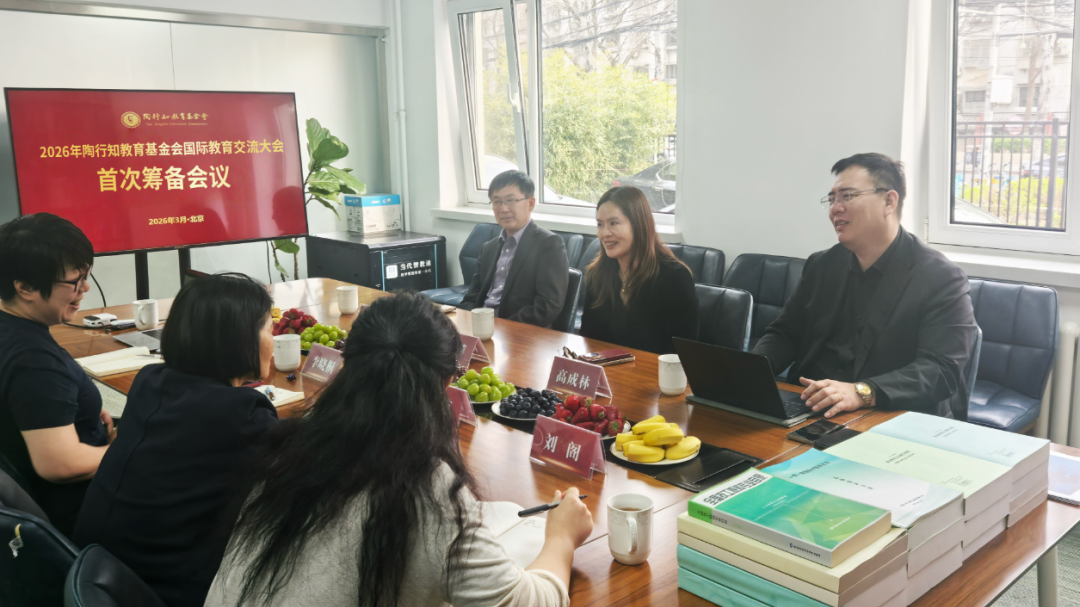
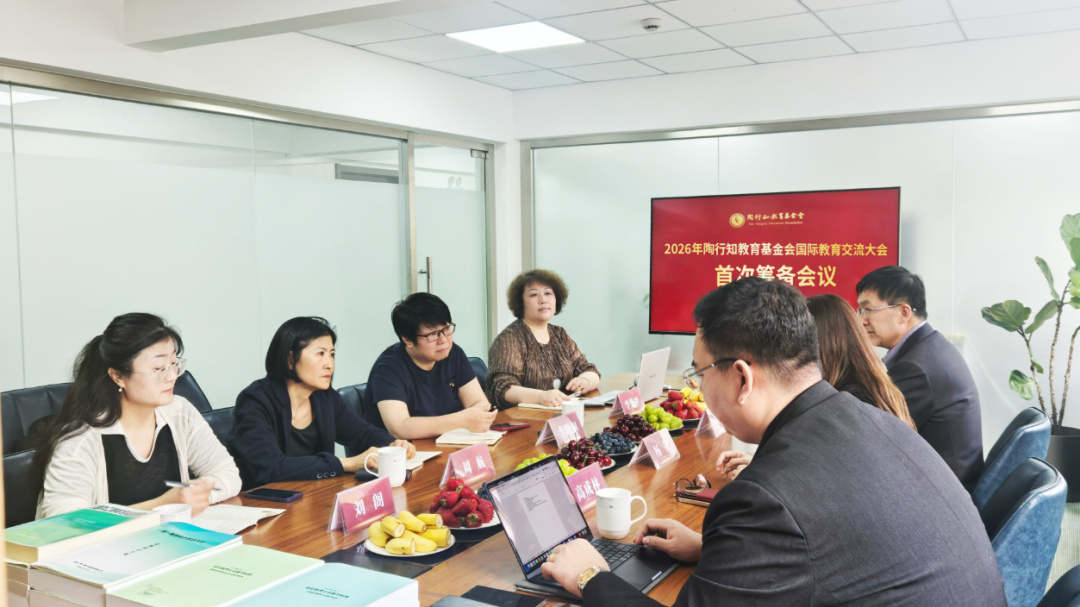
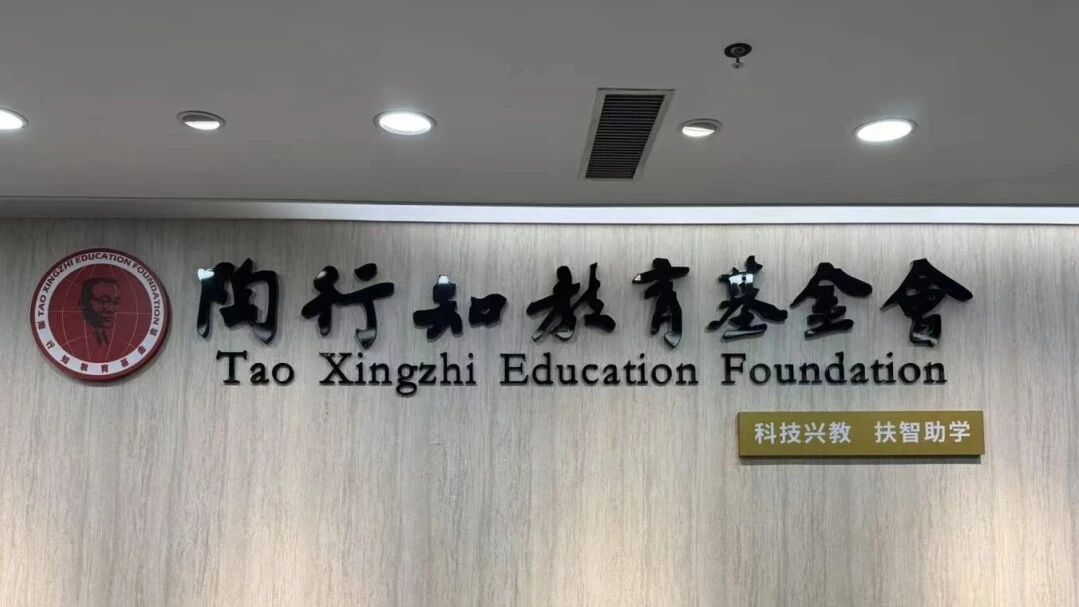
On March 27, a delegation from the college comprising Chairperson Yang Ping, President Yang Jie, and Vice President Gao Chenglin visited the Tao Xingzhi Education Foundation, where they received a warm reception from Li Xiaotong, Executive Director of the Foundation, Li Yanting and Liu Ge, Deputy Directors, as well as Zhou Hang, Deputy Director of the Mingyuan Future Education Research Institute and Director of the International Department of Beijing Mingyuan Academy. Both parties conducted in-depth exchanges on the preparatory work for the International Education Exchange Conference, clarifying the conference's positioning, content design, and international cooperation direction. The college will participate in the conference preparation and serve as the rotating chair of the first International Education Exchange Conference.
Based on Pragmatic Orientation, Focusing on Core Themes of Vocational Education
The meeting clarified that this conference will take "vocational education" as its sole core theme, closely addressing the development shortcomings of Chinese vocational education and international comparative advantages, abandoning the traditional conference model centered on single educational ideologies, and striving to create a pragmatic, collaborative, and effective international exchange event. The conference theme is "Inheriting Tao Xingzhi Spirit, Co-building a New Ecosystem for International Education," aiming to promote Tao Xingzhi's educational thought and drive innovative development of vocational education from a global perspective.
Breaking Formalism, Constructing Immersive Classrooms
The conference highlights the "pragmatic breakthrough" orientation, firmly opposing formalistic signing ceremonies and plaque hangings, emphasizing that "doing is more effective than speaking." In terms of content design, a "main conference + sub-forum" compatible model is adopted: the main body focuses on vocational education, while simultaneously setting up a basic education sub-forum, highlighting practical cases of career planning courses extending to junior high school levels and vocational enlightenment integrated into compulsory education, and introducing domestic and international experiences from Finland and Hainan Middle School. The conference innovatively proposes the "conference as classroom" model, designating more than one-third of the conference period as immersive teaching sessions, through activities such as Chinese and foreign teachers teaching the same lesson with different structures, enterprise engineers entering classrooms, and student works being exhibited and evaluated on-site, achieving the pragmatic goal of "holding one conference, conducting a batch of classes, and signing a batch of genuine agreements."
Taking Germany and Japan as Main Forces, Deepening School-Enterprise Collaboration
In terms of international resource integration, the conference will take Germany as the preferred cooperation partner, fully leveraging its global leading advantages in the dual system and nursing and elderly care fields, while simultaneously promoting the participation of vocational colleges and education groups from Japan, Russia, Malaysia, and Ireland; cooperation with the United States will focus on AI technology applications, while resources from the United Kingdom and France await further connection. In terms of implementation, the conference will rely on the hardware resources of the host school's own industry-education integration bases, campuses within industrial parks, and tertiary hospital-level practical training buildings to ensure that real classroom practical training and enterprise order class displays are authentic and tangible, achieving "breakthrough communication" from self-talk to facing the general public.
Multi-Party Linkage, Co-drawing a New Chapter for Vocational Education
The conference is tentatively scheduled for early September to avoid the peak conference period in mid-to-late September and the Teachers' Day holiday, facilitating participation from both university teachers and students and basic education stage students. In terms of organizational mechanism, the conference will be guided by the China Center for International People-to-People Exchange of the Ministry of Education, hosted by the Tao Xingzhi Education Foundation and the Mingyuan Future Education Research Institute, led by the International Education Branch of Liaoning Private Education Association, and co-organized by integrating comparative education research forces from Beijing Normal University, large German education groups, top domestic vocational schools, and leading enterprises. Participants will include education department officials from home and abroad, presidents of renowned institutions, education experts, representatives of international education institutions, experts in Tao Xingzhi educational thought research, and business representatives concerned with talent cultivation.
This exchange has laid a solid foundation for the successful convening of the conference. Both parties agreed that this conference is not only an international feast of ideas but also a deep practice of industry-education integration. In the future, all parties will work hand in hand with pragmatic and efficient execution to fully create an international exchange event that can truly promote the "breakthrough" development of Chinese vocational education, contributing to the construction of a modern vocational education system with Chinese characteristics and world-class standards.