To implement the work arrangements of the 2026–2027 China-Russia Years of Education and deepen the cultural exchange and educational collaboration between Chinese and Russian youth, on the afternoon of July 17, the closing ceremony of the 2026 Russian Teenagers' Study Tour Camp in China was warmly inaugurated at Dalian Maple Leaf College of Technology. The several-weeks-long study tour came to a successful conclusion, as 104 Russian teachers, students, and parents successfully completed all study-tour courses—Chinese language training, experiences of China's intangible cultural heritage, and explorations of the coastal city—and gathered on campus to look back together on this immersive period of study in China.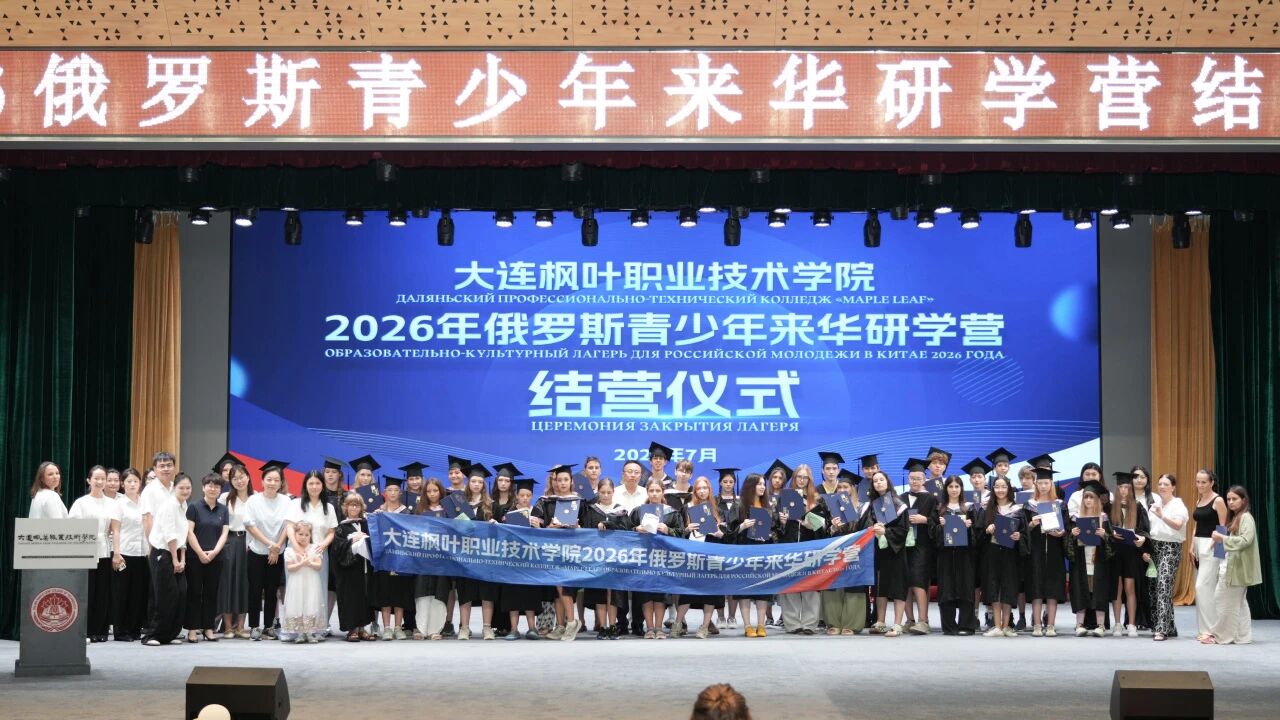
As the study-tour footage played scene by scene and slowly came to a close, a warm atmosphere lingered in the venue. Wang Zhongze, Dean of the School of Continuing Education and International Cooperation and Exchange of Dalian Maple Leaf College of Technology, stepped onto the stage to deliver a speech. He gave a comprehensive review of the camp's fruitful outcomes, looking back on how, since the camp's opening on June 29, the Russian students had devoted themselves to Chinese language learning, immersed themselves in traditional Chinese culture, visited Dalian's urban landmarks, and genuinely felt the distinctiveness of China's vocational education and the look of the city's modern development—truly achieving linguistic intercommunication, cultural empathy, and mutual understanding of hearts. Dean Wang Zhongze noted that this study tour was a vivid practice through which the college has deeply cultivated China-Russia educational cooperation and implemented the tasks related to the China-Russia Years of Education; weeks of companionship broke down language barriers and allowed the youth of the two countries to forge a pure and profound cross-border friendship. He encouraged all Russian camp members to bring what they had learned, seen, and felt on this trip back to Russia, to keep studying Chinese and conveying Chinese culture, and to serve well as young envoys of the ever-lasting friendship between China and Russia. At the same time, he extended a sincere invitation once again, welcoming everyone to return to the campus in the future for further study, and to continue writing a new chapter of China-Russia youth exchange with the campus as a bond.
After the dean's hopeful address concluded, Wang Shuo, representative of the Chinese teaching faculty of the study tour, walked slowly onto the stage to share her heartfelt reflections from the teaching period. On behalf of all Chinese language teachers, she congratulated the Russian participants on successfully completing all study-tour courses, and recounted in detail everyone's transformation over this period: from the initial bewilderment and curiosity upon first encountering Chinese characters, to fluent recitation and effortless conversation; from unfamiliarity with China's cultural heritage, to immersively experiencing the charm of traditional folk customs. The students were focused in class, actively interacted, and treated others with warmth, fully demonstrating the sunny and courteous demeanor of Russian youth. Wang Shuo stated that the value of language learning lies in perseverance—the closing of the camp is not the end of Chinese language learning, but a new starting point for cross-cultural exchange. She hoped that after returning home the students would keep deepening their Chinese, voluntarily serve as cultural envoys of the two countries, and tell the real and vivid stories of China to their families and friends back home, and she wished everyone a bright future and success in their studies, so that the friendship between Chinese and Russian youth would endure.
After the Chinese teachers' sharing concluded, the representative of the Russian leading teachers took the stage to speak. On behalf of all Russian teachers and students, she expressed sincere gratitude to our college for its well-designed course arrangements and thoughtful reception and support. The rich courses in Chinese language, traditional culture, and urban study tours allowed the students to fully appreciate Chinese culture and the charm of the city of Dalian, and to genuinely feel the inclusiveness and friendliness of the Chinese people. The Russian teacher stated that the China-Russia Years of Education has built an exchange platform for the youth of the two countries, and that this study tour is a new starting point for friendly exchanges, hoping that the students would keep learning Chinese after returning home and take the initiative to spread the story of the friendship between the two countries, and wishing that the friendship between Chinese and Russian youth would last forever.
Subsequently, two Russian student representatives took the stage to speak. They shared what they had gained during the study tour: the college offered courses such as Chinese language, Tai Chi, and calligraphy; the teachers taught patiently and took attentive care of their daily lives, making them feel warmth in a foreign land. Through this period of study, their Chinese proficiency had greatly improved, and they had gained an intuitive understanding of a real and vivid China. They pledged to keep studying Chinese after returning home, to share their study-tour experiences with family and friends back home, to serve as envoys of friendly exchange between Chinese and Russian youth, and, on behalf of all Russian students, to thank all the teachers for their hard work.
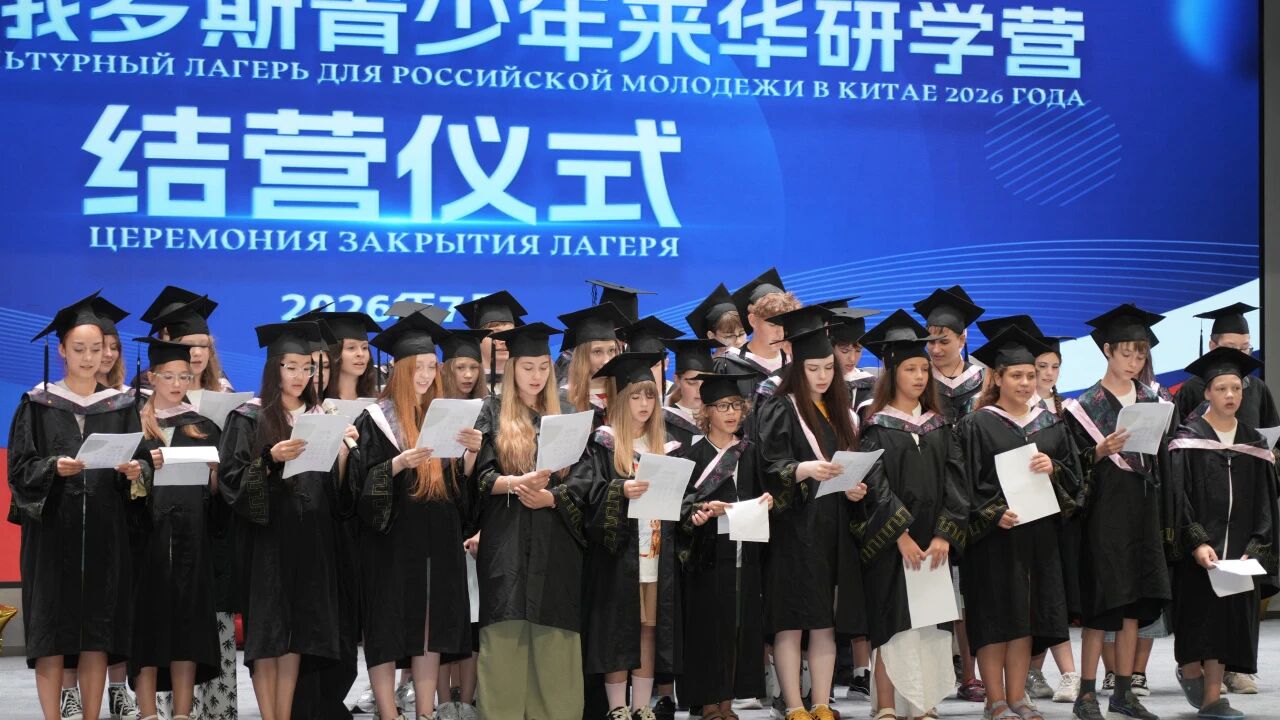
After the students' heartfelt sharing concluded, the venue welcomed a wonderful showcase of study-tour achievements. Study Tour Class One took the lead, lining up and stepping onto the stage to recite classic ancient poems in unison—their enunciation clear and their rhythm melodious; as the recitation ended, Study Tour Class Two took the stage in turn, and the ringing cadence of their odes echoed through the auditorium, fully displaying the elegant charm of traditional Chinese culture. After the poetry performance, all Russian camp members joined in singing the classic Chinese song "The Moon Represents My Heart." The gentle, tender voices built a bridge of hearts understanding one another, recounting with youthful voices the profound friendship of mutual understanding and integration between China and Russia; applause rose and fell from the audience, and the warm atmosphere at the scene reached its peak.
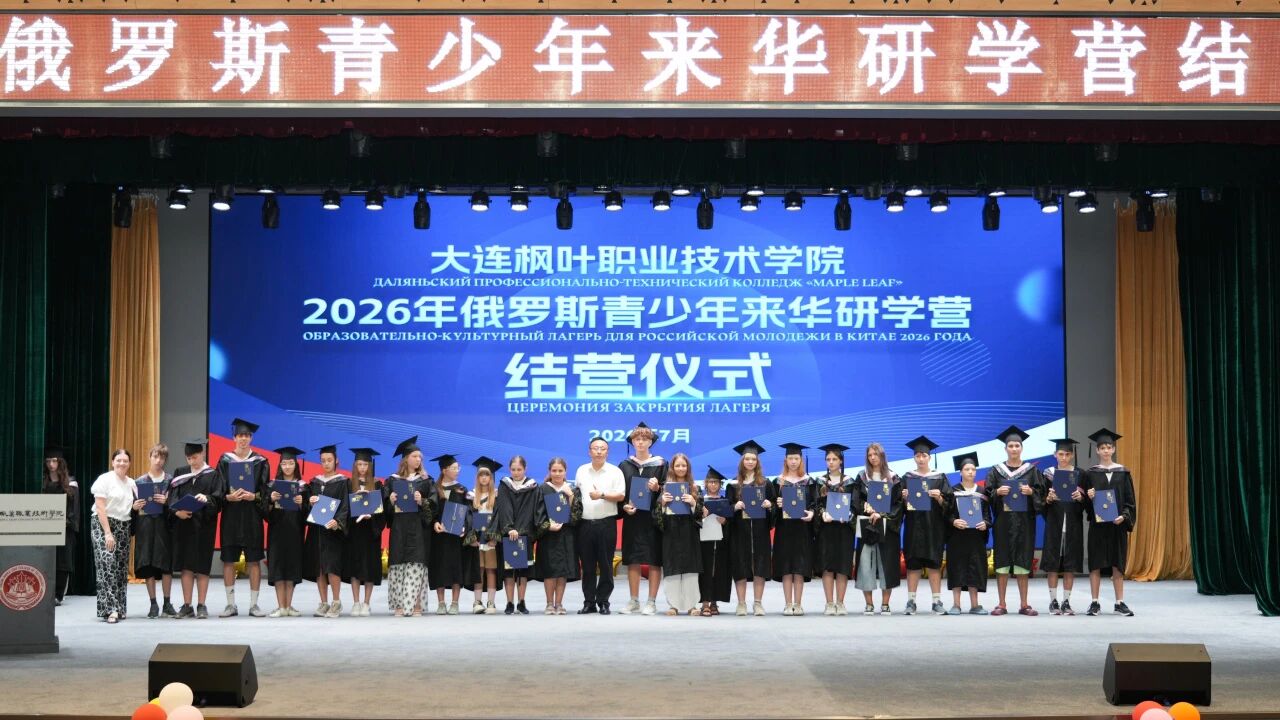
As the moving singing slowly faded, the ceremony entered the solemn certificate-awarding segment. Dean Wang Zhongze and Vice Dean Zhou Yun, in turn, conducted the tassel-turning for each camp member and personally presented their exclusive completion certificates. A tassel and a certificate—these served both as the official testimony that the Russian students had successfully completed all study-tour courses and as a special token preserving the deep friendship between the youth of the two countries; every handshake and every smiling face froze a warm moment unique to this study tour.
The successful closing of this Russian Teenagers' Study Tour Camp in China is a landmark achievement through which our college has actively responded to the call of the China-Russia Years of Education and steadily advanced the implementation of bilateral youth exchange. In the future, the college will continue to broaden the pathways of China-Russia international educational cooperation, enrich the vehicles of Chinese-language study tours and cultural exchange programs, and keep building a regularized platform for youth exchange. With education as a bridge and youth as a medium, it will continuously cultivate international young talents who are bilingual and broad-minded, and keep writing a new chapter in which Chinese and foreign youth know and stand by each other and civilizations blend.