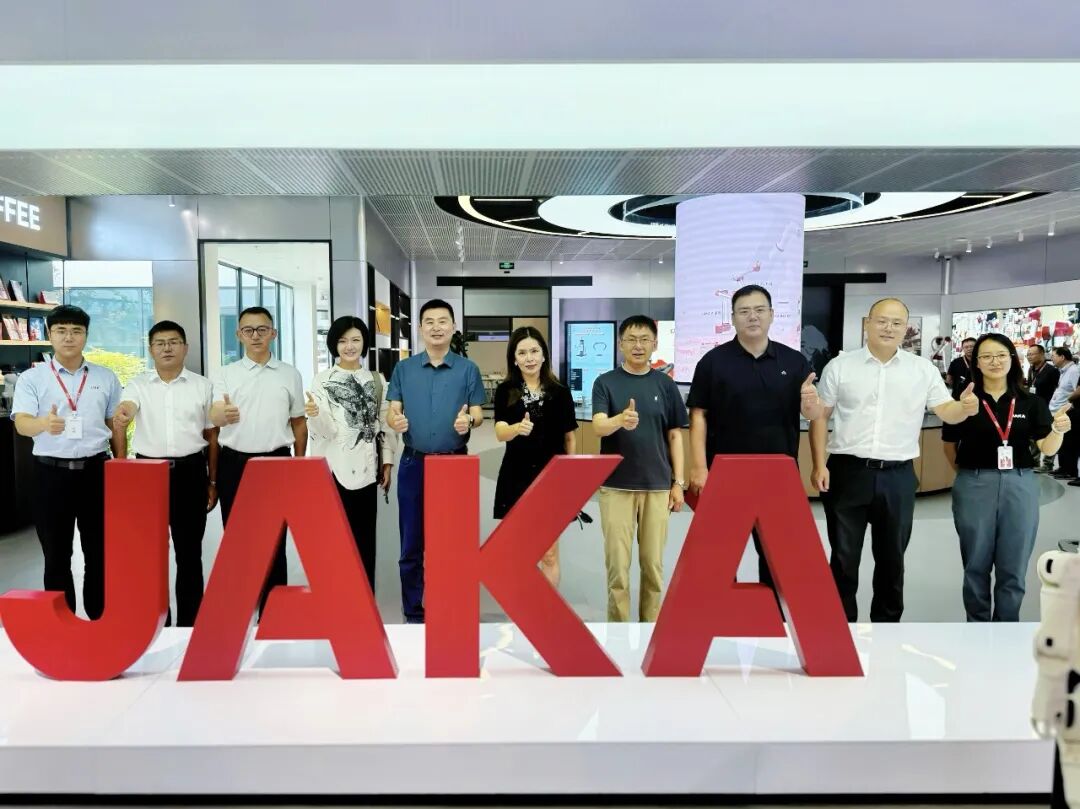
On July 27, a six-person delegation led by Chairperson Yang Ping, President Yang Jie, Executive Vice President Gao Chenglin, Vice President Eilis, Minister of the Publicity Department Xue Fei, and Dean of the School of Innovation and Entrepreneurship Gao Hongyin visited JAKA Robotics Co., Ltd. (Shanghai) for research. Wang Jiapeng, Co-founder and Director of JAKA Robotics, together with relevant heads, warmly received the delegation.
JAKA Robotics is a leading enterprise in China's collaborative robotics and embodied intelligence sector. It has formed a 'product + curriculum + base + competition + standard' five-in-one education service system, with self-developed collaborative arms and embodied robots at its core, developing industry-aligned curricula and case libraries, and deeply participating in national-level competitions and the formulation of vocational standards. Previously, JAKA had co-built industry colleges with relevant institutions, creating a replicable 'three centers + one base' industry-education integration paradigm.
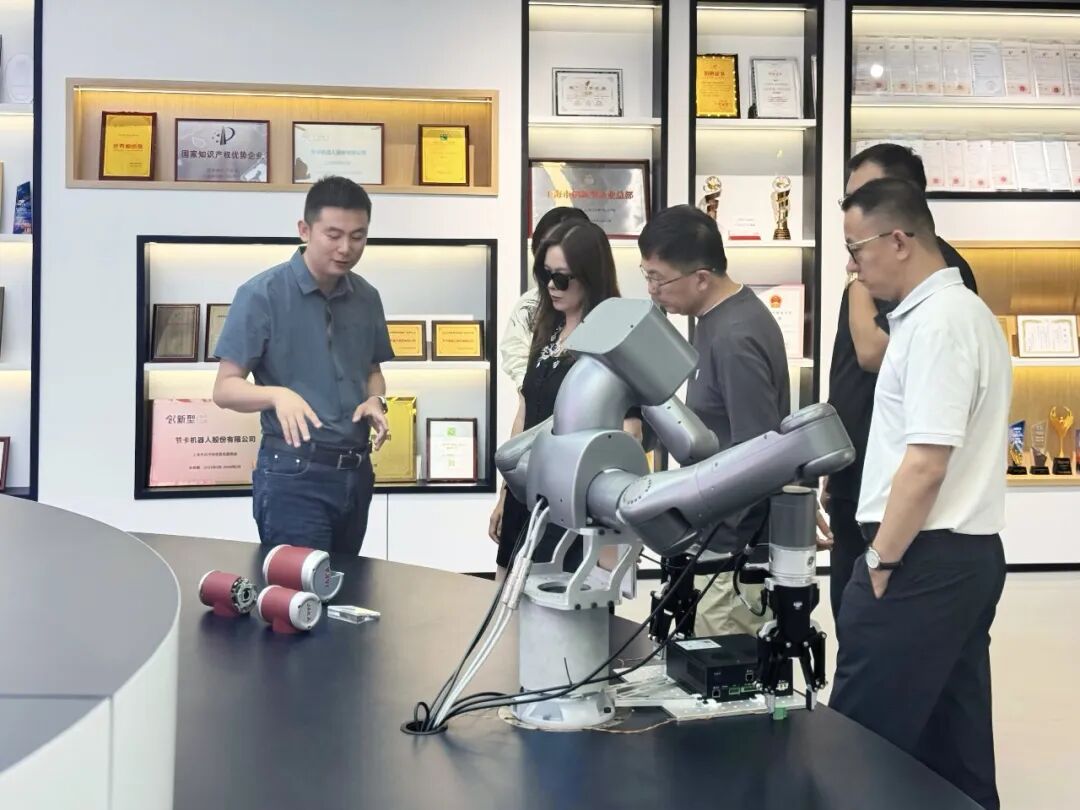
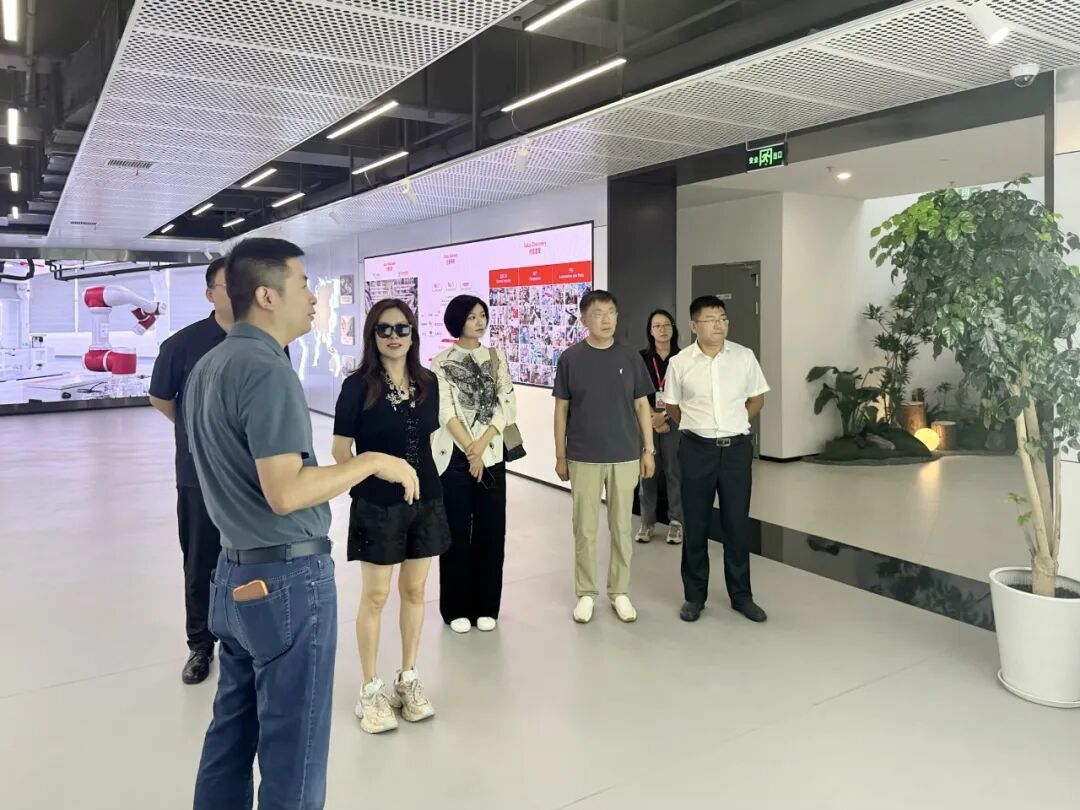
During the research visit, the college leaders first toured the JAKA Robotics exhibition hall, gaining a detailed understanding of the company's development history, core technologies, and industry standing, and experienced firsthand the typical applications of collaborative robots in industrial manufacturing and service scenarios. Subsequently, the group went deep into the advanced production line, observing on-site the entire production system from component assembly, system debugging, whole-machine testing, logistics and transportation, to delivery and acceptance. Wang Jiapeng accompanied the group throughout and provided professional explanations, giving the college leaders a more intuitive and in-depth understanding of JAKA's collaborative and embodied robots, the industry manufacturing standards, and development trends.
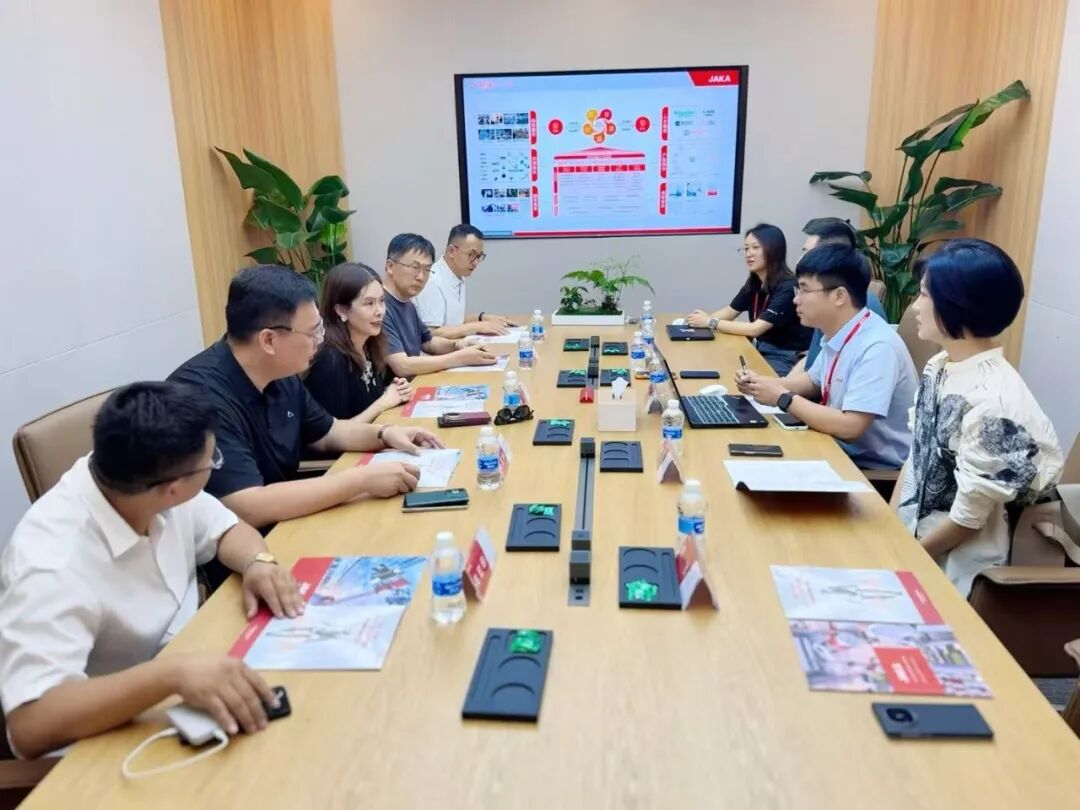
During the discussion session, Pang Hao, Head of JAKA's Education Industry, systematically introduced the company's strategic layout and practical achievements in education. Its educational philosophy of 'coming from industry, serving industry' — transforming industry knowledge from typical industry scenarios into standardized teaching cases, completing most skill pre-learning through digital twin labs, and then transitioning to real production-line training — won high recognition from the college leaders.
Chairperson Yang Ping fully acknowledged JAKA Robotics' technological accumulation and educational layout in the industry, and elaborated on the college's core demands for industry-education integration: first, to bring real production lines onto campus and build productive training bases, enabling students to participate in real production processes such as robot assembly, debugging, and maintenance and repair on campus, realizing 'production lines onto campus, teaching as production'; second, to increase investment in the direction of embodied intelligence, leveraging JAKA's technological strengths to jointly build an AI R&D lab, cultivating high-skilled talent for frontier fields such as data collection and model training, and promoting the upgrading and differentiated development of the college's intelligent manufacturing-related programs.
Chairperson Yang Ping pointed out that Dalian is home to more than 2,600 smart manufacturing enterprises, with urgent demand for industrial robot application and operation-maintenance talent. The college already has the qualifications to enroll international students and the conditions for international education; the two sides can conduct in-depth cooperation in talent cultivation, competition hosting, and the joint development of vocational skill assessment standards, opening up a closed loop of 'industry demand — talent cultivation — talent delivery.'
This research visit laid a solid foundation for in-depth cooperation between the two sides in industry-education integration, production lines onto campus, and embodied intelligence. Next, the two sides will conduct in-depth engagement on specific matters such as building a regional productive training base, introducing collaborative robot production lines and assembly-testing processes, and developing student-participatory delivery projects oriented toward maintenance-debugging and process application. At the same time, leveraging its existing international education resources, the college will explore joint cultivation with JAKA's overseas cooperation channels, and, drawing on its experience in hosting Ministry of Education 'white-list' competitions, form synergy with JAKA in skills competitions and vocational certification standard formulation, continuously strengthening the regional influence of both sides in smart manufacturing talent cultivation in Northeast China.