
To respond deeply to the reform and development needs of vocational education in the new era, steadfastly advance the college's intensive and high-quality development, continuously optimize its education system, and refine its high-caliber faculty, the college held its 2026 Expert-Led Lecture Series in the auditorium of the Qidingshan Campus on August 10. The lecture series specially invited Dean Zhang Zhensun — Secretary-General of the Industry-University-Research Branch of the Chinese Creativity Society, Deputy Director of the Beijing Innovation Research Institute, and Secretary-General of the Applied Curriculum Construction Alliance — to teach throughout the program. Through an immersive learning model of "expert lectures + group discussion + outcome reporting," the series provided all faculty and staff with comprehensive, in-depth professional empowerment, helping teachers across the college renew their educational philosophy, sharpen their teaching skills, and steadily advance the college toward becoming an industry-education integration entrepreneurial university.
Guiding Principles:
Understanding Maple Leaf, Anchoring the Course Toward an Industry-Education Integration Entrepreneurial University
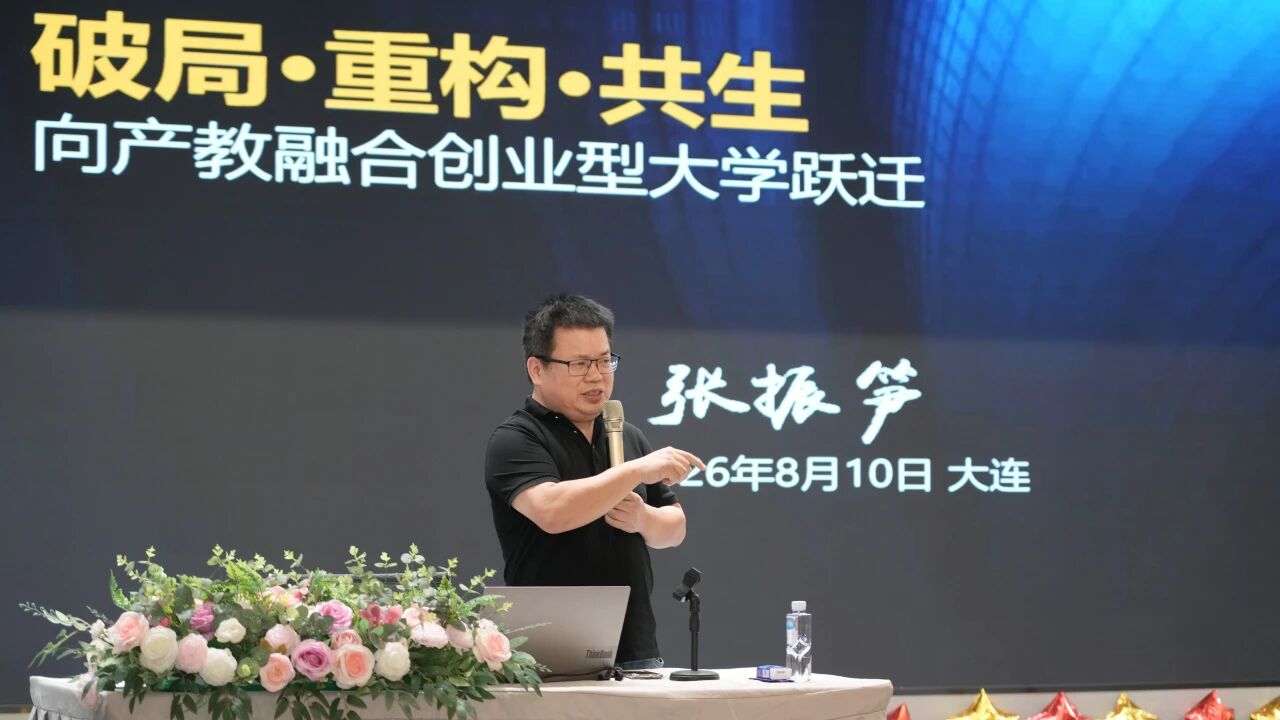
In the morning, Secretary-General Zhang Zhensun delivered a special lecture titled "The New Ecosystem of Maple Leaf Education." Grounded in the college's actual governance and stage of development, he systematically explained the strategic positioning, core substance, and action pathways for Maple Leaf Vocational College's leap toward an "industry-education integration entrepreneurial university." Zhang noted that the college has grown into "a phenomenon" among China's vocational institutions and is moving from domestic to international stature; yet the tension between the college's rapid development and the long growth cycle of its cadre and teaching workforce is the principal contradiction constraining its leap — the pace of workforce development cannot keep up with reform and innovation. He stressed that vision determines the boundaries of action, and that in an age of deep uncertainty, organizational learning exists precisely to find certainty amid uncertainty; a sustainable private vocational college of the future must possess two core traits — "profound industry-education integration and formidable entrepreneurial capacity" — and that its educational character, talent quality, and graduate-placement advantage are the bedrock of an institution's survival and development. Addressing the ontology, value theory, learning theory, and curriculum theory of the "Maple Leaf New Ecosystem," Zhang proposed that industry-education integration is the DNA of Maple Leaf Vocational College, and that the entrepreneurial spirit means not merely founding economic entities but pioneering work in one's own post — every teacher is an entrepreneur. Drawing on learning theories such as constructivism, embodied cognition, and action orientation, he reiterated the educational principle of "teach less, learn more, do it for real," and advocated a teaching model in which "professional skills connect to the industry chain, the classroom connects to the production line — step out of the classroom into the factory, and return to the classroom with questions in hand." He also sketched a phased action roadmap of "classroom revolution — college upgrading — ecosystem symbiosis": in the short term, launch a classroom revolution in the "small patch of land" each teacher can control; in the medium term, institutionalize industry colleges; and in the long term, build the campus into a benchmark park for industry-education integration entrepreneurial universities nationwide. He called on all faculty and staff to unite their thinking, deepen their understanding, and respond through concrete action to the three fundamental questions of "why students choose you, why enterprises employ you, and why the industry cannot do without you."
Putting It into Action:
Each College's Special Reports Chart the Blueprint for Education in the New Semester
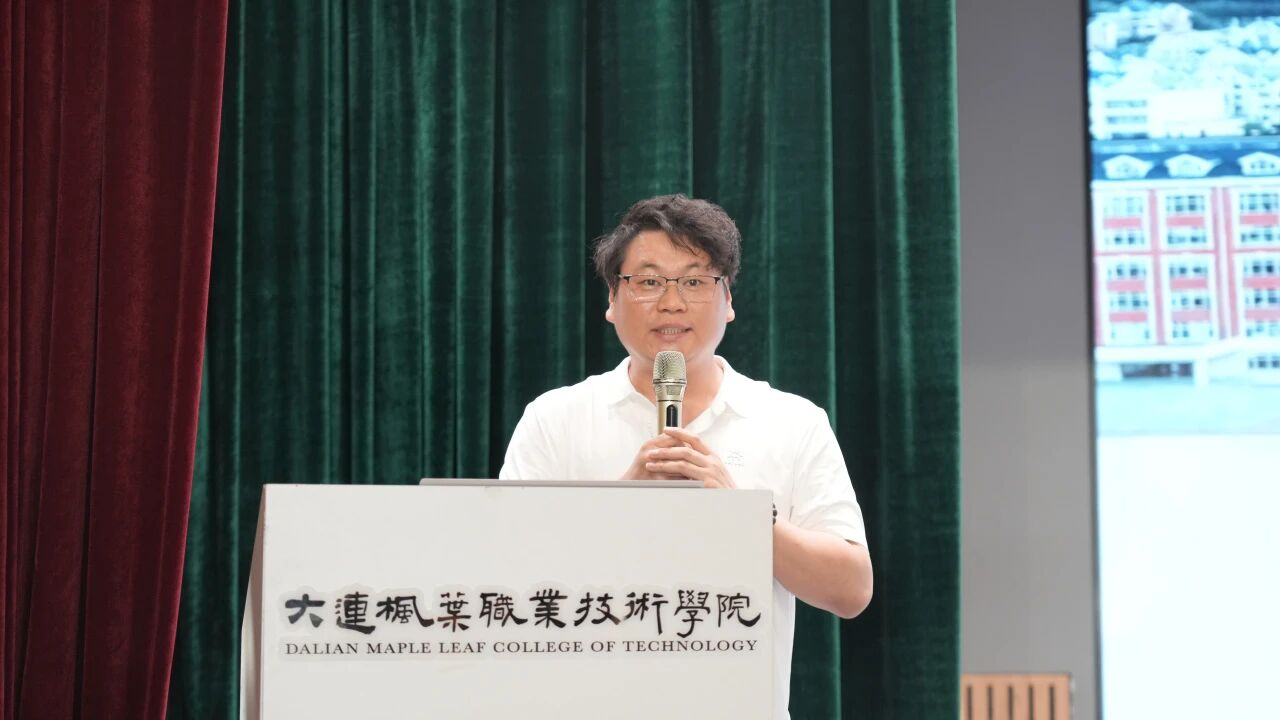
In the afternoon, each college (department) delivered special reports in turn, closely aligned with the core dimensions of Secretary-General Zhang Zhensun's morning lecture and tied to their own work. Representing their units across such dimensions as industry-education integration, innovation and entrepreneurship, curriculum reconstruction, and faculty transformation, the speakers both systematically reviewed their college's (department's) work trajectory and achievements, and — with the new semester's opening imminent — provided ample theoretical grounding and practical ideas for deepening industry-education integration, implementing innovation and entrepreneurship education, and building applied curricula. The reports were pragmatic and concrete, with salient highlights, fully demonstrating our teachers' fine working style of diligent study, insightful reflection, a quest for truth, and steadfast action, and achieved the discussion goals of colliding ideas, sharing experience, and pooling strength for common progress.
"How Can One Teach Without First Learning:"
See the Student, and Rediscover the True Essence of Education in the Depths of Life
After the outcome reports, Secretary-General Zhang Zhensun delivered a second special lecture, "How Can One Teach Without First Learning." He proposed that "every student is a vast world," emphasizing that seeing the student is the logical starting point of education. He profoundly explained the significance of teachers exploring students' inner worlds — attention to and understanding of students' inner worlds not only enables teachers to grasp learning conditions in a timely manner and effectively guide student development, but also enriches teaching practice and sparks students' interest in learning, inquiry, and their future careers. Secretary-General Zhang Zhensun particularly stressed the importance of teacher-student interaction, noting that teachers should become curriculum designers, learning-condition observers, and learning counselors. Through analysis of specific cases, he reconstructed the campus life and inner journeys of students with psychological difficulties, examined such students' living conditions from a psychological perspective, and analyzed the root causes of their problems from the dimensions of family of origin and school management — thereby leading to reflection and inquiry on "what education is and how to educate." He called on teachers to hold firm to their educational stance, transform industrial resources into structured learning experiences, and rebuild sound teacher-student relationships through "seeing students, accompanying students, and connecting with students," so that education truly returns to its essential purpose of cultivating people.
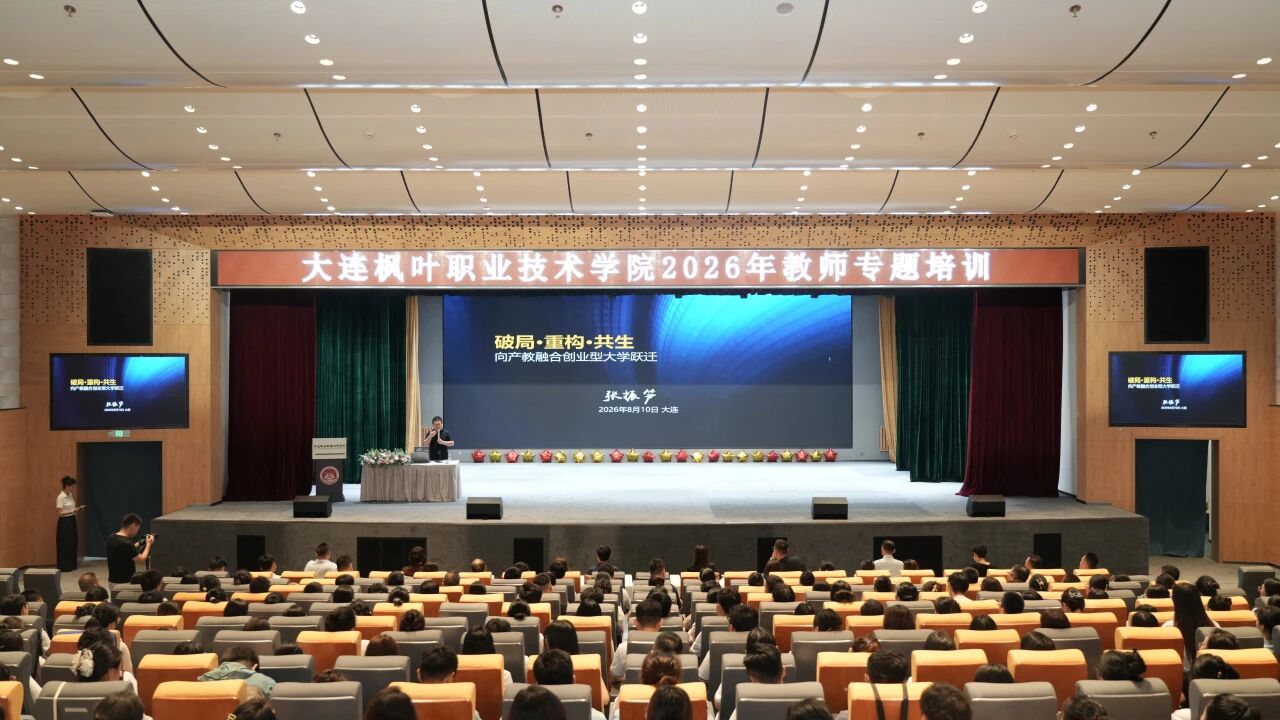
Learn, reflect, practice, and awaken to a new journey; act with steadfast dedication and shoulder the mission. This training was both a spiritual fortification for the college's faculty by the Group and a deep refinement of educational philosophy concerning the college's steady and enduring progress. It profoundly manifested the Group's earnest expectations and strategic support for building the college's workforce, and marked a critical and solid step in the college's march toward an industry-education integration entrepreneurial university; it was both a conscious response to the three questions of "why students choose you, why enterprises employ you, and why the industry cannot do without you," and a solemn promise to every student's growth and success. Looking to the future, the Group has set higher requirements for all teachers: Maple Leaf teachers should consciously act as "understanders, designers, and companions," deeply study the Maple Leaf New Ecosystem, hold firm to their educational stance, immerse themselves in the science of learning, and turn what they gained from the training into vivid practice of classroom revolution and industry-education integration — striving to write a new chapter of the college's high-quality development as they grow together with their students and resonate with the times.