To keep pace with the national development of the artificial intelligence and robotics industries, precisely connect with frontier industrial resources, deepen industry-education integration, and empower the high-quality development of its programs, Gao Hongyin, Dean of the Innovation and Entrepreneurship College of Dalian Maple Leaf College of Technology, was invited by the Chinese Institute of Electronics to travel to Beijing for the 2026 World Robot Conference, where he engaged in high-end industrial exchanges, in-depth enterprise negotiations, and industry-education resource matchmaking.
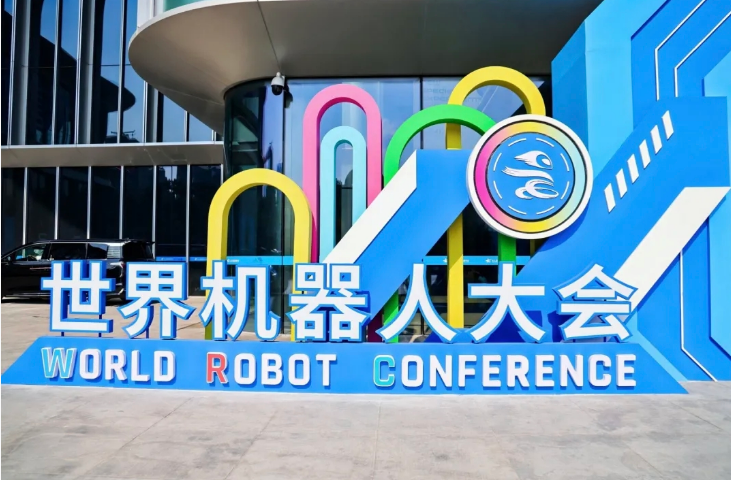
This year's World Robot Conference was held from August 19 to 23 at the Beiren Yichuang International Convention and Exhibition Center in Beijing E-Town (Yizhuang). Jointly hosted by the Chinese Institute of Electronics and the World Robot Cooperation Organization, and built around the annual theme of "human-machine symbiosis and production-demand integration," it is China's highest-level, largest, and most influential international industry event in the fields of robotics, artificial intelligence, and embodied intelligence.
The conference brought together more than 300 of the world's leading technology enterprises, over 100 academicians and industry experts, and over a thousand cutting-edge intelligent equipment exhibits. It simultaneously featured a main forum, more than 70 thematic sub-forums, an industry exposition, high-level robotics competitions, and a series of industry-education supply-demand matchmaking activities, comprehensively showcasing frontier technological achievements such as humanoid robots, embodied intelligence, intelligent manufacturing, AI and big data, and smart service equipment. It serves as a national-level core platform for vocational colleges to connect with leading industries, access real industrial demands, and implement school-enterprise cooperation.
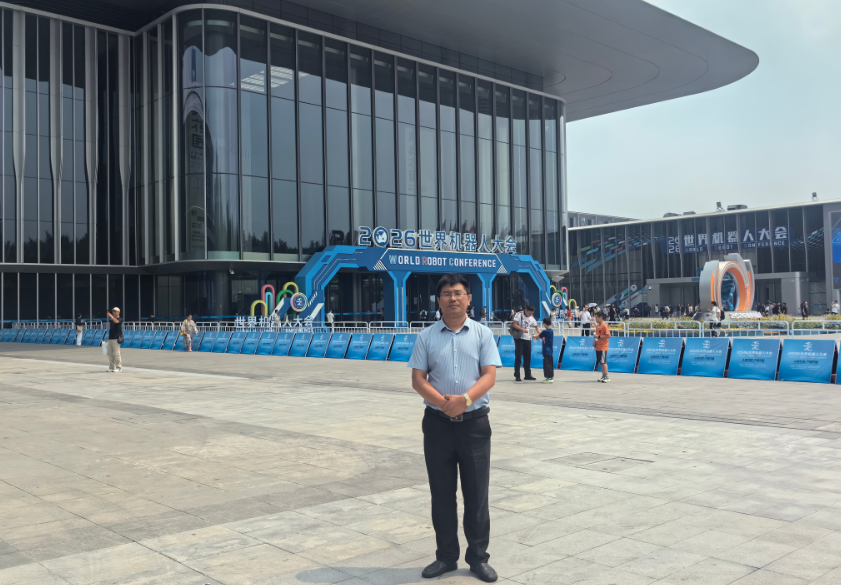
During the conference, Dean Gao Hongyin remained focused throughout on four core directions—the implementation of industry-education integration, the joint development of industrial projects, AI talent cultivation, and high-quality student employment—and took an active part in industry forums, enterprise pavilion tours, and precise school-enterprise matchmaking negotiations. He conducted in-depth research visits to leading AI enterprises such as Galaxea and 37C Data (Beijing Jina Shengguang Network Technology Co., Ltd.), and held deep exchanges on core areas of cooperation including the industrial implementation of AI data annotation, the joint development of an in-campus factory industrial park, the building of intelligent training platforms, the settlement of real industrial projects on campus, the targeted supply of talent, and the co-development of curricula—thus gaining an accurate grasp of the latest talent standards, job demands, and industry trends in the AI and robotics sectors in 2026.
Looking ahead, Dalian Maple Leaf College of Technology will continue to cultivate the frontier tracks of AI, intelligent manufacturing, and robotics applications, actively linking national-level industrial platforms with resources from leading technology enterprises. It will keep strengthening its in-campus factory industrial park, substantiating its industry-education integration projects, and optimizing its high-quality employment services—empowering program development through industry and supporting talent cultivation through technological innovation, so as to continuously supply high-caliber technical and skilled talent to the regional digital economy and intelligent industry.