To advance the integration of industry and education in the field of emergency safety, open up the full “enrollment–cultivation–employment” chain, and explore new models of diversified cooperation—such as practical training for emergency-equipment R&D, targeted talent cultivation, and joint safety-science popularization—on September 9, Wang Ziming, General Manager of Dalian Asia-Pacific Fire-Fighting Engineering Co., Ltd., led a delegation to visit and hold discussions at our college. Li Yanhua, Song Minhao, and Wang Bo, Deputy General Managers, and Yang Qianqian, HR Director, accompanied him on the visit.
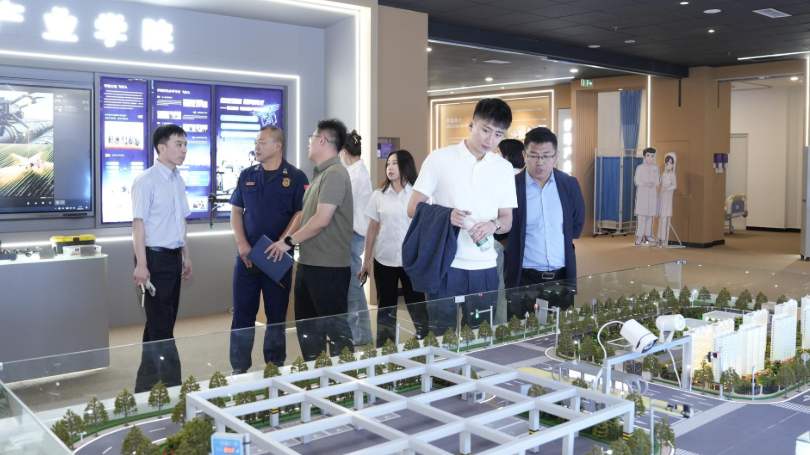
Yang Ping, Chairperson of Dalian Maple Leaf College of Technology; Yang Jie, President; and Gao Chenglin, Executive Vice President, attended the symposium. Gao Hongyin, Dean of the Innovation and Entrepreneurship College, and Wang Bo, Dean of the School of Security & Emergency Management and Cryptology Industry College, accompanied the tour and participated in the exchanges throughout. The two sides held in-depth discussions on multiple topics—including targeted cultivation of emergency-safety talent, joint development of practical-training and production bases, standardized construction of emergency kits for college dormitories, safety publicity and science popularization, assessment for vocational-skill certificates, and employment placement—and reached a number of cooperation consensuses.
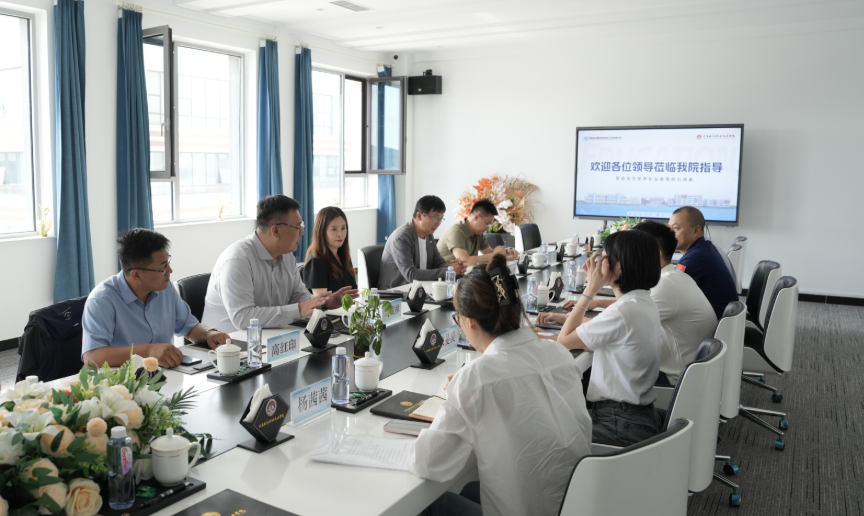
During the symposium, the two sides exchanged views on key directions under the guidance of ideological and political education—namely, emergency-safety education and science popularization, joint targeted talent cultivation, construction of practical-training platforms, and standardized development of campus safety supplies. Our college presented its achievements in emergency-safety science communication and professional-connotation development, and proposed leveraging its own educational foundation to explore demonstration projects for campus safety, actively engaging provincial authorities to create a replicable and scalable model for safety development at colleges and universities.
Drawing on industry-development policies and actual job-site needs, the company stated that it will give full play to its advantages in industry, projects, and faculty resources, deeply participate in the entire process of the college's talent cultivation, and jointly build an integrated “enrollment–cultivation–employment” educational chain. By introducing high-quality industry instructors, building practical-training platforms, and smoothing employment-placement channels, it will help students improve vocational skills and obtain professional certificates, striving to cultivate high-quality technical and skilled personnel who meet frontline industry needs. The two sides also exchanged views on the feasibility of building industry-education-integrated practical-training platforms.
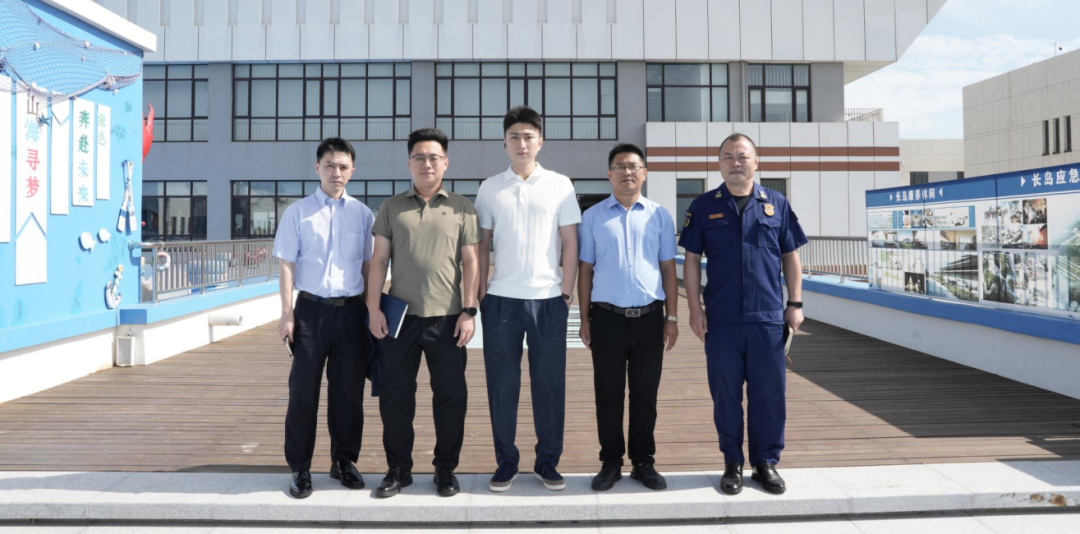
Next, the two sides will accelerate the implementation of a strategic cooperation agreement, refine the collaborative-education mechanism, and advance all cooperation items in a coordinated manner to deliver tangible results. This exchange broadened the development path for our college's emergency-safety-related programs, and the college and enterprise will work in the same direction to contribute the strength of vocational education to the development of the regional emergency-safety industry.