
To deepen curriculum reform and address the real social needs of the silver economy, the College formed a cross-disciplinary project team to tackle practical age-friendly challenges through division of labor and joint problem-solving. On the occasion of the Double Ninth Festival, the Digital Economy Industry College brought the classroom to Cininghui Senior Care Home. On the morning of October 18, faculty and student volunteers delivered rice, flour, and cooking oil as consolation supplies to the elderly, joined them in making dumplings, and chatted about daily life, conveying the warmth of the festival. At the same time, armed with tape measures and survey questionnaires, they went deep into the residents' rooms, corridors, dining halls, and bathrooms, taking on-site measurements and carefully recording field conditions, turning the front line of elderly care into a vivid, hands-on professional practice classroom.
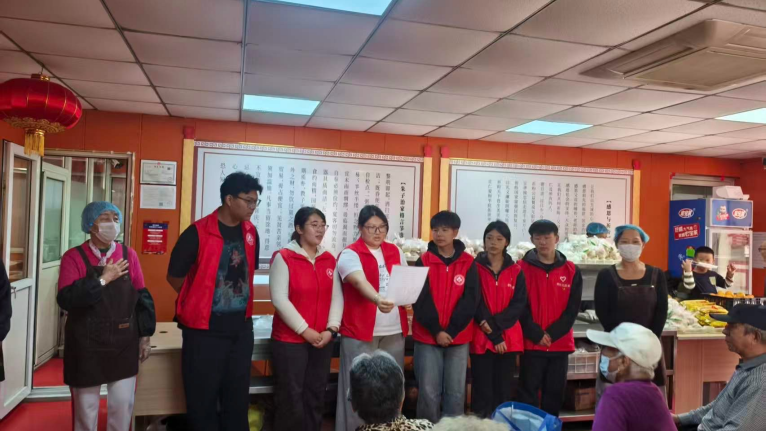
Students in red vests extend Double Ninth Festival greetings to the elderly at the senior care home.
The activity was jointly organized by the Digital Economy Industry College through its "classroom + studio + club" model: the classroom defined the research tasks and methods for age-friendly design; the college's Shuijixing Space Design Studio provided the project platform and supervising instructors; and the relevant design clubs handled mobilization and coordination. Multiple forces were brought together to turn a single respect-for-the-elderly activity into a real-project, real-site professional practice course.
Centered on the real question of "how to help the elderly stand up on their own, walk steadily, and use things with ease," students from programs such as Environmental Art Design, Digital Media, and E-commerce were grouped into the same project team: some took measurements and drew floor plans, some shot footage and conducted interviews, and others calculated costs and probed needs. A single elderly person's act of standing up simultaneously involves the shape of handrails, clear spatial distances, material texture, and usage cost — no single course can answer it alone.
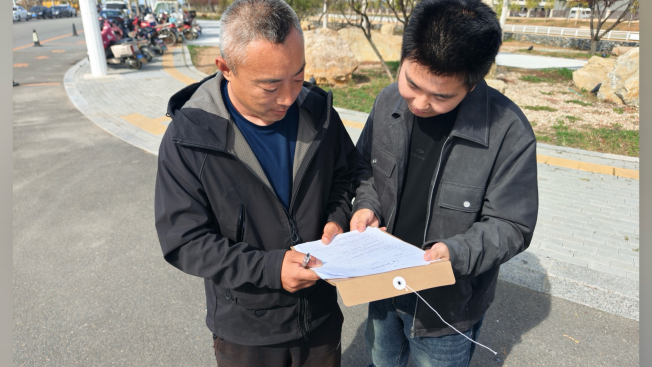
Students conduct field surveys, recording details of the accessible environment along the way.
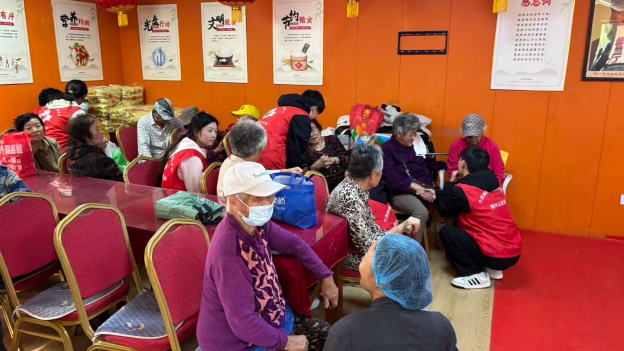
Students chat with the elderly about daily life, noting their real needs through conversation.
Over the course of the morning, the project team recorded dozens of specific problems: elderly residents always steady themselves on the table edge before standing; the slope of the bathroom floor makes them afraid to step; some chairs look beautiful but are impossible to rise from once seated. These warm, lived-in details were compiled into a "problem list" that entered the course project repository directly, becoming the source material for practical training in courses such as Healthy Human Settlements Design and Interior Design Practice.
The curriculum reform approach: starting from the real needs of the silver economy, form cross-disciplinary project teams to answer the same question from different angles — design addresses "is it easy to use," digital media addresses "is it clearly communicated," and e-commerce addresses "can it sell," ultimately converging into a complete solution within the project.

Exploratory age-friendly handrail series designs from the Shuijixing Space Design Studio.
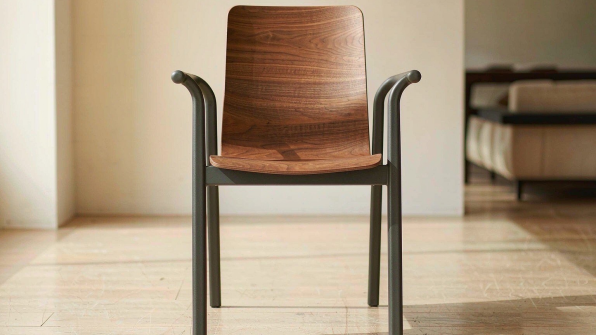
Exploratory age-friendly armchair designs from the Shuijixing Space Design Studio.
"In the past, when we taught age-friendly design, students drew beautiful plans on paper but had no idea where the elderly actually get stuck; now students from several majors squat together to discuss the same chair, and only then is the problem truly seen," said the lead instructor.
This is precisely where the College is focusing its curriculum reform: no longer teaching in isolated course chapters, but taking real problems as the starting point of projects, relying on the "classroom + studio + club" multi-platform model to link research, design, and verification into a closed loop, and intertwining public-service activities with professional training, so that students acquire skills and find their direction while serving society.
Respecting and caring for the elderly is a traditional virtue, and responding to aging with professional expertise is a mission of the times entrusted to design students. Next, the College will transform the findings of this research into a cross-disciplinary practice project, advance the teaching-reform path of "real problems — field research — collaborative design — outcome feedback," and truly bring the talent needs of the silver economy into the classroom.