The End-of-Term Teacher Competence Improvement Training for the First Semester of the 2024-2025 Academic Year officially kicked off on January 4, 2025, in the Lecture Hall on the Second Floor of the Library at Qidingshan Campus of the College. Focusing precisely on current key teaching points, this training is committed to comprehensively improving teachers’ professional qualities and innovative abilities. Presided over by Lv Shuangshi, Deputy Director of the Academic Affairs and Scientific Research Office, the training was delivered by Chu Jinmei, Director of the Academic Affairs and Scientific Research Office, and Qu Ling, Deputy Director of the Academic Affairs and Scientific Research Office. More than 170 full-time teachers participated in the whole training.
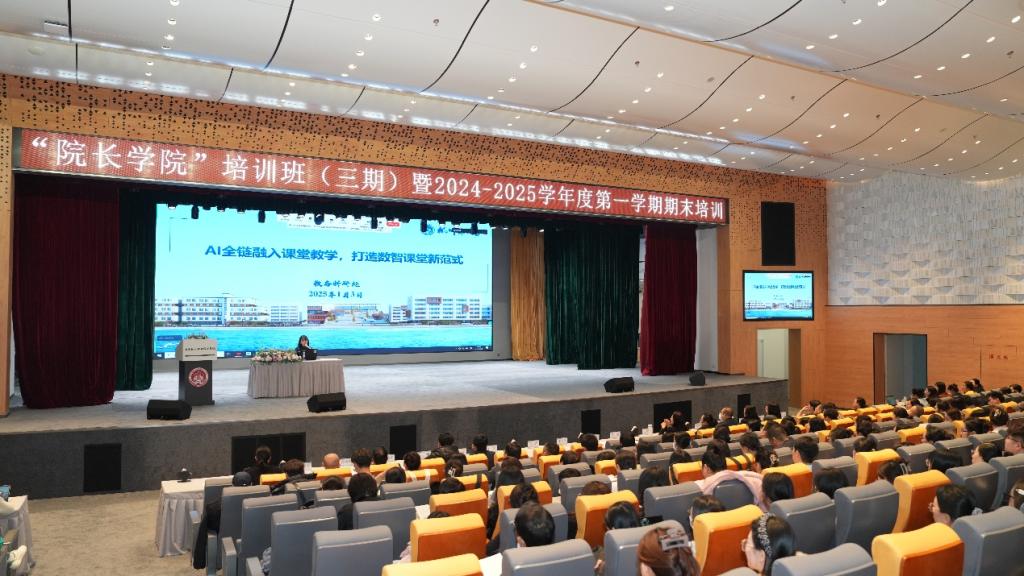
Director Chu Jinmei of the Academic Affairs and Scientific Research Office gave an in-depth and detailed interpretation of the Implementation Plan for the Full-Chain Integration of AI into Curriculum and Teaching, drawing a clear blueprint of smart classrooms for teachers. Director Chu emphasized three key points: first, on the basis of the initial achievement of "AI in every course", press ahead to strive for the higher goal of "AI in every class", and ensure that AI technology is seamlessly integrated into all teaching links of each course; second, give full play to the auxiliary role of AI technology to support teachers in carrying out precise teaching, implement personalized teaching strategies in the pre-class, during-class and after-class stages according to students’ individual differences, so as to significantly enhance students’ learning interest and stimulate their classroom participation enthusiasm; third, actively encourage teachers to skillfully integrate AI technology into the practical teaching of general and professional skills, enabling students to imperceptibly cultivate AI literacy and refine innovative thinking abilities in practical operations, laying a solid foundation for adapting to the future society.
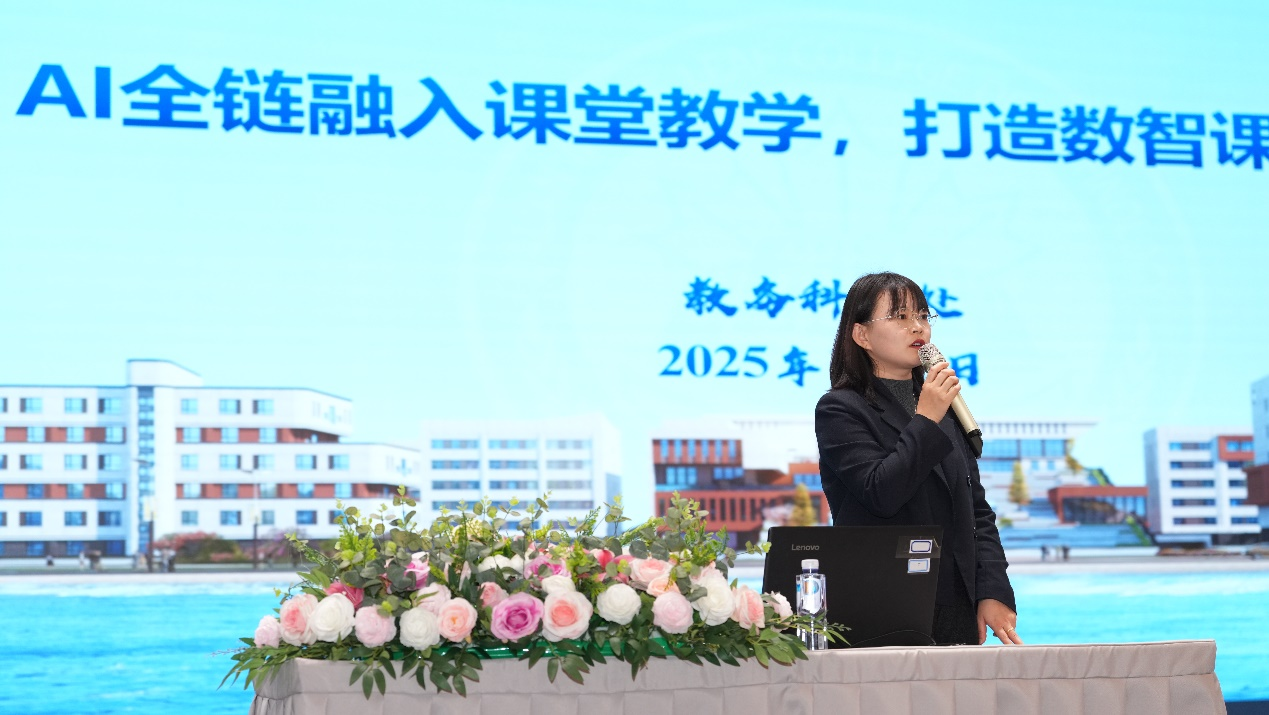
In addition, Director Chu introduced the pilot platforms, including the National Smart Education Public Service Platform, Vocational Education Cloud, MOOCs and the Professional Teaching Resource Database Platform for Vocational Education, providing a wide range of online teaching resources for teachers and students.
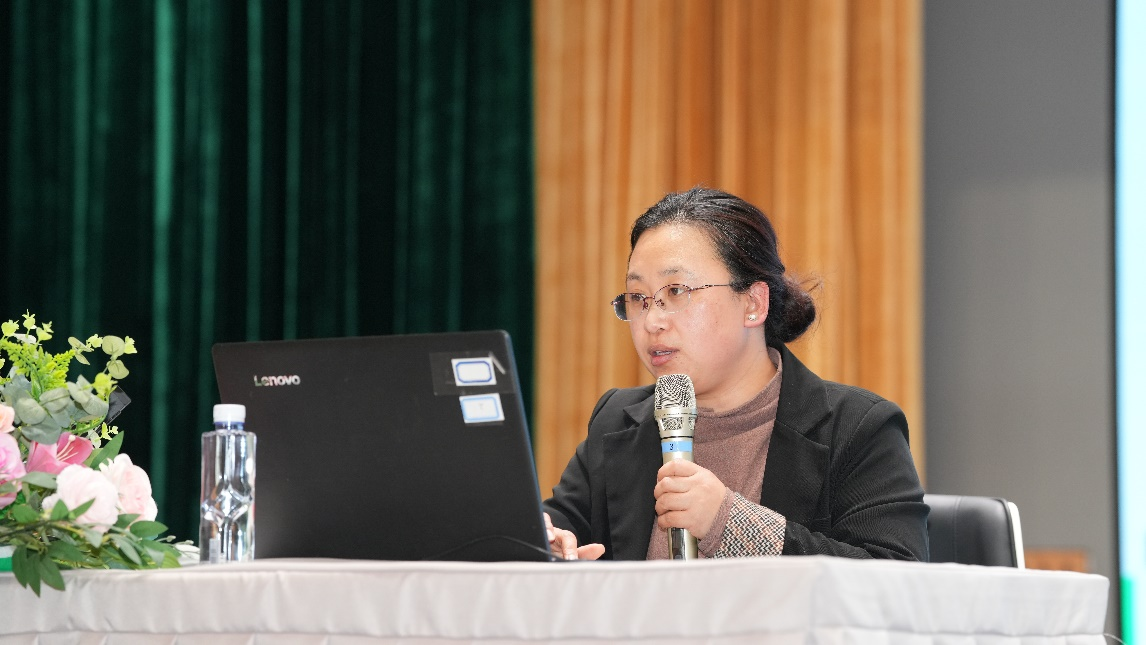
Subsequently, Deputy Director Qu provided detailed and professional guidance focusing on the compilation of digital loose-leaf textbooks (lecture notes). Deputy Director Qu stressed that high-quality textbooks undoubtedly occupy a core position in the entire curriculum system and content structure, and compared with traditional textbooks, digital textbooks should undertake the tasks of effectively expanding the scope of knowledge, realizing interactive and real-time updates, and meeting students’ personalized learning needs. Among them, the fine granular analysis of knowledge points is not only the cornerstone of constructing digital loose-leaf textbooks (lecture notes), but also a necessary prerequisite for the intelligent and precise push of learning content. Deputy Director Qu’s in-depth explanation helped teachers master key skills: on the one hand, guiding teachers to accurately pinpoint the key and difficult points of courses, match appropriate teaching resources, and develop targeted digital loose-leaf lecture notes; on the other hand, assisting teachers in planning the compilation process to promote the intelligent construction of textbooks in an orderly manner, boosting the high-quality development of education.
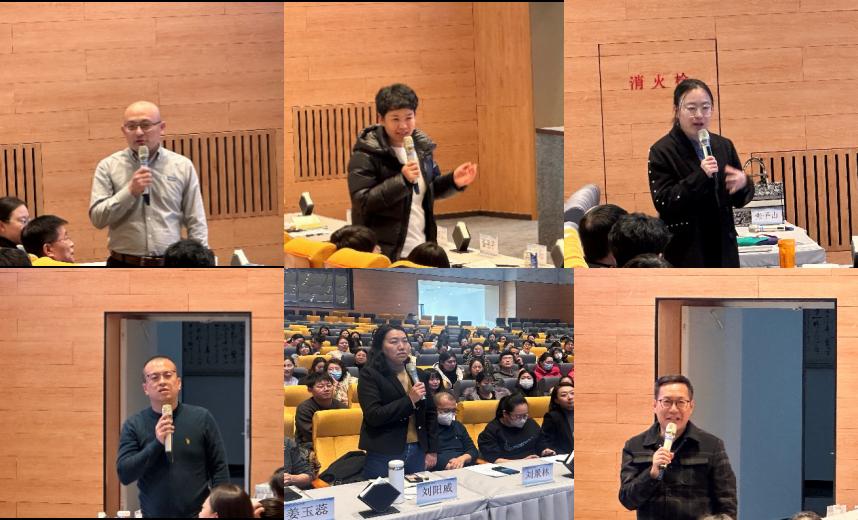
In the post-meeting exchange session, the person in charge of each teaching unit spoke enthusiastically and shared the full gains and profound insights from the training. Facing the cutting-edge and innovative concept of the full-chain integration of AI into classrooms, the person in charge of each teaching unit based on the actual situation of their own units, conducted precise "diagnosis" and put forward suggestions. They all stated that as an emerging technology, the integration of AI into teaching brings both challenges and unlimited opportunities. Only by daring to break through and innovate, and explore and practice bravely, can we keep pace with the times, make AI effectively empower daily teaching and exert its maximum effect.
This training has not only deepened teachers’ understanding of the Implementation Plan for the Full-Chain Integration of AI into Curriculum and Teaching, but also laid a solid foundation for promoting the digital and intelligent transformation of education and teaching in our college. Looking forward to the future, the college will continue to deepen the reform of digital and intelligent education, build more exchange platforms, encourage experience sharing and collaborative innovation among teachers, jointly explore new paths of digital and intelligent education, work together to build a new blueprint for digital and intelligent education, and contribute to cultivating innovative talents adapting to the future society.