To deepen inter-institutional Party building cooperation and comprehensively enhance the standardization and scientific level of primary-level Party building work in both institutions, following Dalian Polytechnic University's research visit to Dalian Maple Leaf College of Technology to solidify the cooperation foundation, on October 29, a delegation from Dalian Maple Leaf College of Technology made a special visit to Dalian Polytechnic University. Both sides jointly launched the "Red Sail Party Building Workshop" series of activities. With "training plus research" as the core format, this activity further advanced the "one-to-one" Party building assistance and interaction between public and private universities, building a practical platform for subsequent joint construction work to go deeper and yield substantive results.
Wei Xiaofeng, Secretary of the Party Committee, and Jin Xiaohui, Deputy Secretary of the Party Committee of Dalian Maple Leaf College of Technology, participated in the joint construction activities. Both institutions adopted a "joint study and shared research" model to promote the implementation of the regulations' spirit, ultimately achieving the goal of enhancing the quality of primary-level Party building in both institutions.
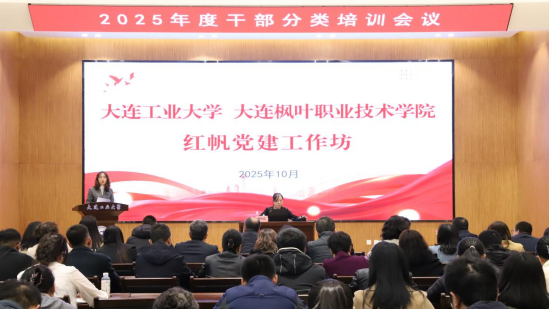
This series of activities focused on the dual dimensions of "theory plus practice," comprising two core components: first, conducting specialized training on the Regulations on the Work of Grassroots Organizations in Colleges and Universities, with lectures delivered by Professor Liu Fengxia from the Party Building Teaching and Research Department of the Party School of the Liaoning Provincial Committee of the CPC, specially invited by Dalian Polytechnic University; second, organizing a research visit to the Garment Museum, promoting the extension of inter-institutional Party building cooperation from "theoretical study" to "professional practice."
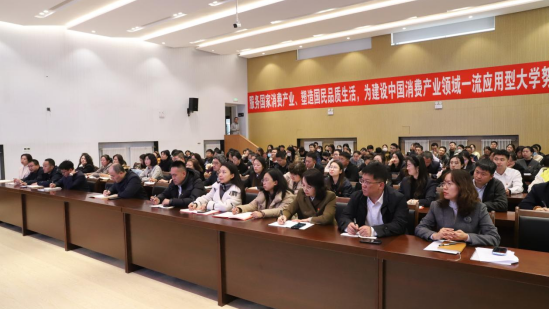
During the specialized training, Professor Liu Fengxia delivered an in-depth lecture themed "Taking the Regulations as the Fundamental Guide to Comprehensively Strengthen the Construction of Primary-Level Party Organizations in Higher Education Institutions," covering three dimensions: the background and contemporary significance of the regulations' formulation, systematic interpretation of core contents, and practical implementation pathways. She elaborated on core requirements for Party building in higher education institutions in the new era, such as "upholding the Party's overall leadership" and "implementing the fundamental task of fostering virtue through education," with focused interpretation of key provisions including the president responsibility system under the leadership of the Party committee, and the establishment and election of primary-level Party organizations. Combining typical cases of Party building in higher education institutions, she provided actionable guidance and recommendations on practical topics of common concern to both institutions, including "preventing ideological risks," "advancing the comprehensive and strict governance of the Party to the primary level," and "deeply integrating Party building with school management and governance."
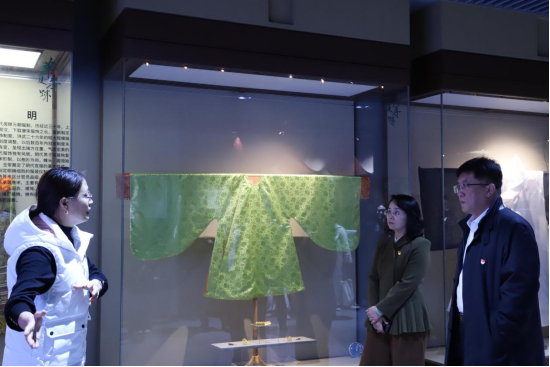
During the research visit, participating leaders and faculty members from Maple Leaf College followed faculty members from Dalian Polytechnic University into the Garment Museum. Following the guide's narration, they gained in-depth understanding of the museum's distinctive features in presenting the historical culture and design innovation achievements in the garment field through on-site examination of exhibits and listening to explanations, further broadening their learning horizons and building more bridges for subsequent cultural exchanges and professional cooperation between the two institutions.
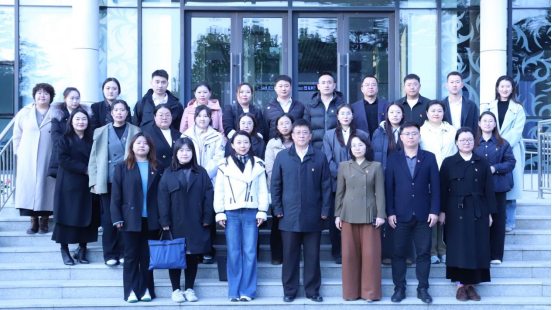
This joint training between the two institutions was both a "synchronized action" in studying the Regulations on the Work of Grassroots Organizations in Colleges and Universities and a "deepening initiative" in inter-institutional Party building cooperation. Through joint study and shared research, it not only unified the thinking on primary-level Party building work in both institutions but also solidified the foundation for collaboration, building a solid platform for subsequent Party building joint construction projects, and helping both institutions achieve high-quality development led by high-quality Party building.